Commercial Waste Brixton

Commercial waste collection in Brixton should be straightforward, organised and suited to the way your business actually works. We handle recurring and one-off waste from offices, shops, hospitality premises, landlords and mixed commercial sites, with disposal arranged around the type and volume of material you need to move. The aim is simple: remove unwanted waste cleanly, keep the process practical, and help you maintain a tidy working environment without turning it into a project of its own.
Our service covers business waste removal for everyday rubbish as well as bulkier clearances that need careful loading and transport. Depending on what is being cleared, we can deal with mixed general waste, furniture, office items, white goods, some construction-related debris and other commercial materials that are suitable for responsible disposal. If you are comparing options, the useful place to start is the scale of the load, how regularly waste builds up and whether you need a one-off clearance or an ongoing arrangement.
For a clear starting point, our work is built around practical collection and sensible disposal rather than generic promises. If you are ready to discuss a job in Brixton, take a look at the details below and request a quotation when you are happy with the scope. We keep the service focused on the waste itself, so you can make decisions without unnecessary complication.
Business waste removal for everyday commercial premises
Business waste removal is the core of this service for many customers. Offices may need mixed paper waste, packaging, redundant desks or broken chairs moved away, while retail units can produce cardboard, display items, shelving and general back-of-house rubbish. Small hospitality spaces often need a different approach again, because storage space is limited and waste can build up quickly if collections are not matched to trading patterns. We work with the load that is actually there, not a theoretical one.
If your site generates a steady stream of waste, regular collection can be more practical than waiting for a major clear-out. The right schedule depends on stock movement, staff numbers, storage capacity and the type of waste produced. A compact premises with frequent deliveries may need a different arrangement from a larger operation with a dedicated store room. If you are unsure what to ask for, a short description of the material and access is usually enough to begin planning the most suitable removal.
What we can collect from commercial properties

Commercial waste often includes a mixture of items rather than a single category, so the collection process has to be flexible. We can deal with office chairs, reception furniture, filing materials, non-sensitive fixtures, shop fittings, packaging, broken appliances and general rubbish that no longer serves the business. Where furniture is involved, we separate items that can be lifted and carried efficiently from heavier pieces that need more care during loading.
Some loads are straightforward, while others need a more detailed sort before removal. For example, mixed office clearances may contain usable furniture, recycling-grade cardboard and landfill waste in the same area. In those cases, clear access, a sensible loading order and a quick decision about what stays and what goes can make the process smoother. If you want a better idea of how a particular mix would be handled, contact us with a brief description and we can discuss the best approach.
Typical business waste jobs include:
- office furniture and fittings
- cardboard, packaging and light commercial rubbish
- shop fixtures, displays and storage items
- broken or unwanted equipment suitable for removal
- mixed clearances from small premises or back rooms
Office waste and workplace clearances
Office waste removal is often more about organisation than volume. A work space may need a few redundant desks taken away, or it may require a fuller clearance after a refurbishment, move or layout change. We can remove office furniture, loose rubbish, unwanted storage units and other non-sensitive workplace items that are ready to leave the site. The practical aim is to reduce clutter while keeping the premises usable during the process.
Where an office is still active, it can help to separate items into clear groups before collection: items to keep, items to move internally and items for disposal. This saves time on the day and helps avoid confusion in shared rooms or storage areas. If there are tight corridors, stairs or loading restrictions, those details matter because they affect the lifting plan and the sequence in which items are removed. A concise description of the workplace usually gives enough information to quote sensibly.
Furniture disposal and bulky items
Furniture disposal is a major part of many commercial clearances, especially when businesses replace desks, seating or storage as part of a reset. We can collect unwanted furniture from offices, retail units and other premises where the items are no longer needed. Bulky loads often require careful handling because they take up more space than general waste and can be awkward to move through narrow entrances, so planning the route out of the building is important.
When furniture is mixed with lighter waste, loading order becomes useful. Heavier items are usually moved first so they can be packed efficiently in the vehicle, with lighter material used to fill gaps and keep the load stable. This approach can make the collection cleaner and more economical than separating every object in advance. If some items are still in use and others are being removed, it is worth marking them clearly so nothing useful is taken by mistake.
Furniture clearance decisions and practical preparation
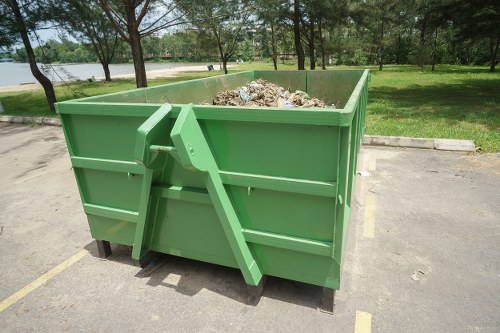
Good furniture clearance starts with a realistic view of what is being removed. Flat-pack pieces, office chairs, sofas, shelving and storage units each present slightly different handling needs, and the final plan depends on whether they are intact, partially dismantled or already broken. We can work with the pieces that remain in place, but the more clearly the load is defined, the easier it is to plan the collection. That is especially true where access is shared with staff, customers or neighbouring occupiers.
Before booking, it is helpful to know whether the items are on one floor or spread across several rooms, whether they are near an exit, and whether any larger pieces will need two-person lifting. You do not need to over-explain the whole site, but a few grounded facts make the quotation more accurate. If a job includes only furniture, or furniture plus general waste, say so directly so the collection is scoped correctly from the start.
For convenience, you can think in terms of three simple questions: what is being removed, where it is located and how much there is. That is often enough to shape the job and avoid unnecessary revisits.
Recycling, sorting and responsible disposal
Business waste removal is not only about taking material away; it also needs to be handled in a way that allows appropriate sorting where possible. Office paper, cardboard, furniture, metals and certain appliances may follow different disposal routes depending on their condition and composition. When a load contains mixed material, a structured approach helps separate what can be sent on for recovery from what must be disposed of as residual waste.
If your business is trying to reduce the amount sent to landfill, the main thing to consider is how the waste is presented for collection. Bundling similar material together, keeping recyclables separate where practical and telling us about any item that should not be mixed into a general load all make the process cleaner. We can then assess the job on what is actually present rather than guessing from a broad label like “office rubbishâ€.
Pricing factors for commercial waste in Brixton
Costs for commercial waste removal usually depend on a small number of visible factors rather than vague assumptions. The main points are the amount of waste, the type of items involved, the ease of access and any handling challenges such as stairs, narrow entrances or limited parking nearby. A compact collection with straightforward access is different from a mixed clearance spread across several rooms or storeys, so a useful quotation needs a few practical details.
If a job contains bulky furniture, mixed waste or items that need sorting before loading, that can affect the time and vehicle space required. The simplest way to approach pricing is to describe the load honestly and note anything unusual about the site. If you prefer, you can also compare more than one option: a smaller collection now, for example, or a fuller clearance after you have finished sorting the premises. Clear information usually leads to a cleaner quote and helps you decide what is most sensible.
About Brixton

Brixton is a district in south London, within the London Borough of Lambeth, known for its dense urban character, strong transport connections and long-standing cultural associations. The area developed significantly in the nineteenth century as London expanded southwards, with rail and tram links helping it grow into a busy inner-city centre. Brixton Road forms one of its best-known corridors, linking the district to central London and carrying a steady flow of traffic through a landscape of shops, housing, civic buildings and transport interchanges. Brixton station on the Victoria line, opened in 1971, remains a major gateway, while nearby Brixton Market and the covered market arcades contribute to the area’s everyday rhythm of trading and social activity. The district is also associated with a distinctive mix of architecture and public space. Victorian and Edwardian terraces sit alongside later housing and commercial buildings, creating a varied streetscape rather than a single uniform centre. Windrush Square provides a civic open space near the heart of the area, and the Brixton Recreation Centre is a notable local landmark. The area’s cultural life is closely tied to its music, food and market traditions, with Electric Avenue among the most recognised street names in London. Brockwell Park lies to the south-west of Brixton and offers a large expanse of open ground, mature planting and historic parkland features, including Brockwell Hall. Together these places give Brixton a character shaped by movement, trade, leisure and community use over a long period, making it one of south London’s best-known urban districts.
Office clear-outs and scheduled collections
Some commercial premises need a one-off visit, while others benefit from planned, repeat collections. Office clear-outs often happen around relocations, renovations, tenancy changes or a general reset of the workspace. Scheduled collections are more useful where waste is predictable and regular, such as businesses with consistent cardboard output or ongoing replacement of stock, fittings or office equipment. The right approach depends on whether your priority is a single large removal or a steady rhythm that keeps the site manageable.
When waste is being produced by several departments or shared storage areas, it can help to nominate a single contact who knows what is leaving the site. That makes it easier to confirm which materials are included, which areas need access and whether anything should be left in place. If the premises is still trading during the collection, timing can be planned to reduce disruption, but the safest option is still to give a clear description of the load rather than relying on broad labels such as “general wasteâ€.
For a straightforward next step, gather the basic facts and then ask for a quotation. If the collection includes furniture, equipment or mixed rubbish, mention that early so the job can be set up properly. Request a quotation when you are ready.
Waste types, access and loading considerations

Commercial waste work often becomes easier when the site conditions are understood in advance. Access points, loading bays, stairs, lifts and parking restrictions all affect how a collection is carried out. A small amount of planning can prevent wasted time on the day, especially if the premises are busy or shared with other occupiers. The same applies to the waste itself: a load made up of loose bags is handled differently from one made up of large, rigid items or heavier fixtures.
It also helps to think about the order in which material will be removed. If some waste is in one room and furniture in another, or if there are items that need to stay until the end of a refurbishment, the sequence matters. We can work with clear instructions, but the instructions do not need to be complicated. A short summary of what is present, where it is and whether there are access limits is normally enough to shape the collection properly.
To get started, use the details below, compare the main service options that fit your premises, and then send over the basics for a quote. If the load is mixed or bulky, that is still fine — contact us with the key information and we will take it from there.